How To Create a Custom WooCommerce Checkout Experience

Toolset allows you to create truly custom WooCommerce stores, from single-product pages to the Shop page. However, for customizing the checkout experience, you’ll need to use a few other specialized plugins.
As a WooCommerce site owner, you might be looking for ways to enhance the design and content of your e-commerce site to match your branding. Not long ago, we showed you how to build a truly custom WooCommerce store with Toolset.
Now, we’ll show you how adding a few plugins into the mix can further help you build an e-commerce website that suits your needs – and the needs of your customers.
We tested all plugins listed in this article with Toolset and confirmed their complete compatibility.
Why You Should Create a Custom WooCommerce Checkout Experience
To meet the needs of your customers, your WooCommerce store should provide your customers with a unique, unforgettable experience. If you’ve gone through previous Toolset tutorials, you already know how to connect products to other post types or add custom fields and taxonomies to your WooCommerce products.
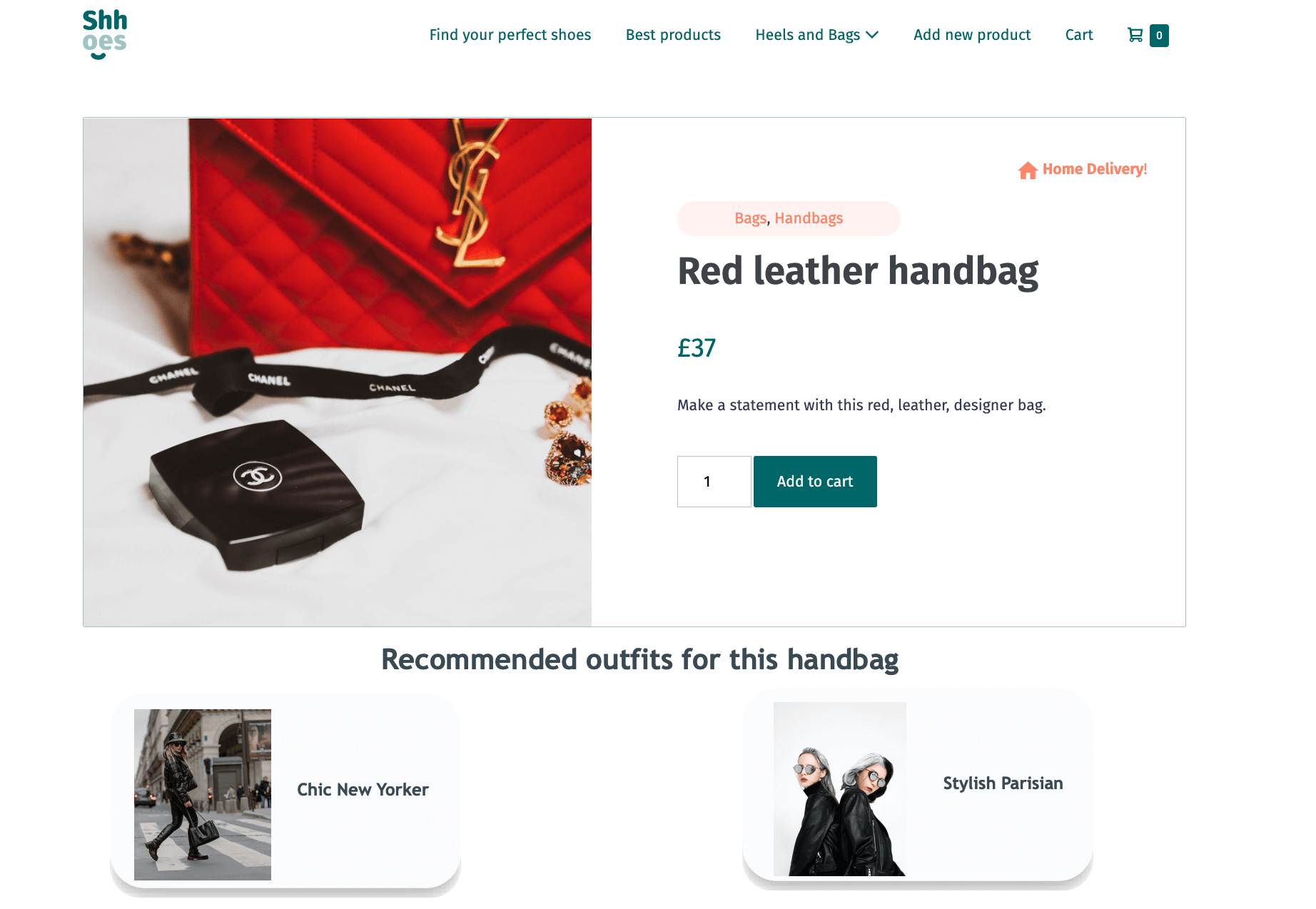
Product page listing related Outfit posts
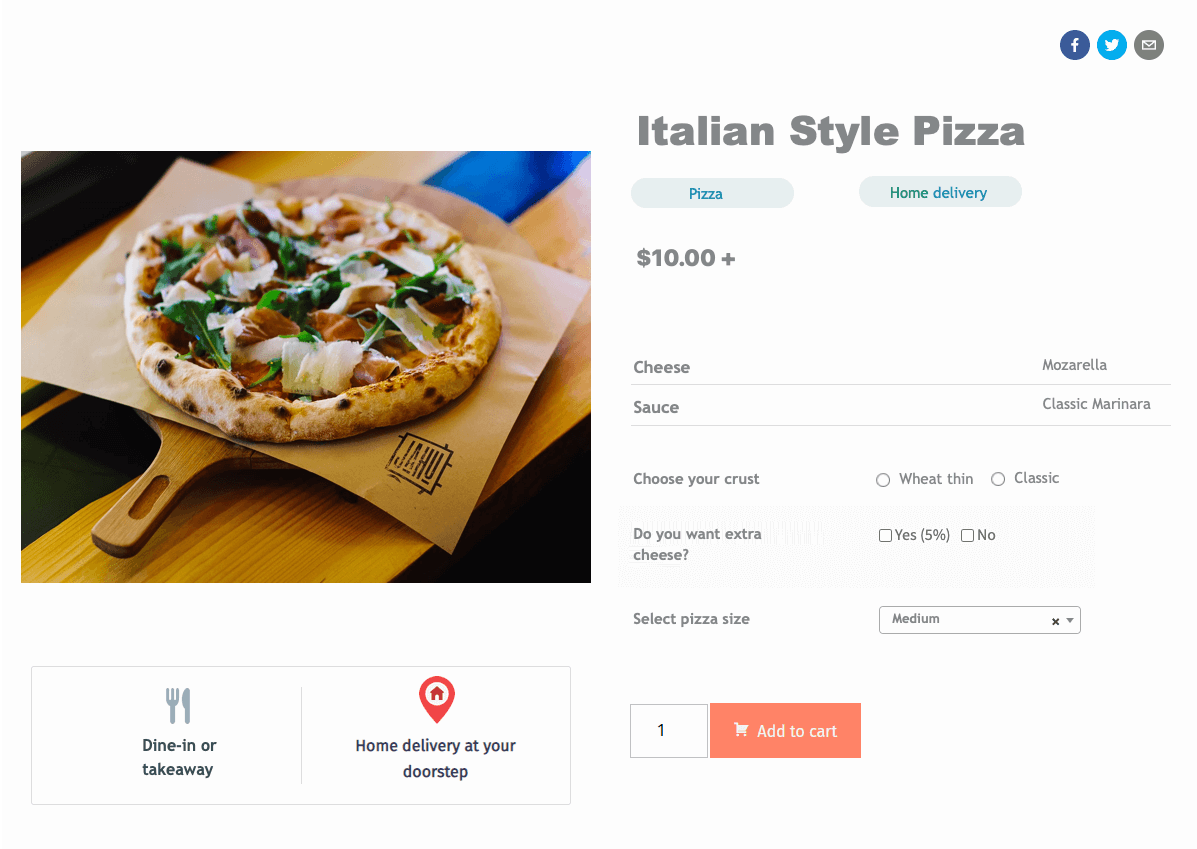
Custom fields added to a WooCommerce product
But it’s equally important to keep customers happy towards the end of the purchasing process. To decrease the number of abandoned carts, you may also find yourself wanting to:
- Add a personal touch to the emails you send to your customers
- Add extra fields to the checkout process
- Add a multi-step checkout process
For this, we’ll look into a few plugins from ThemeHigh that work great alongside Toolset.
By combining Toolset and ThemeHigh plugins, you can add these advanced features and more to your WooCommerce site without any coding knowledge.
Customizing the Checkout Process
As soon as you set up your WooCommerce store, you’ll see some pages automatically created. One of these pages is the Checkout page:
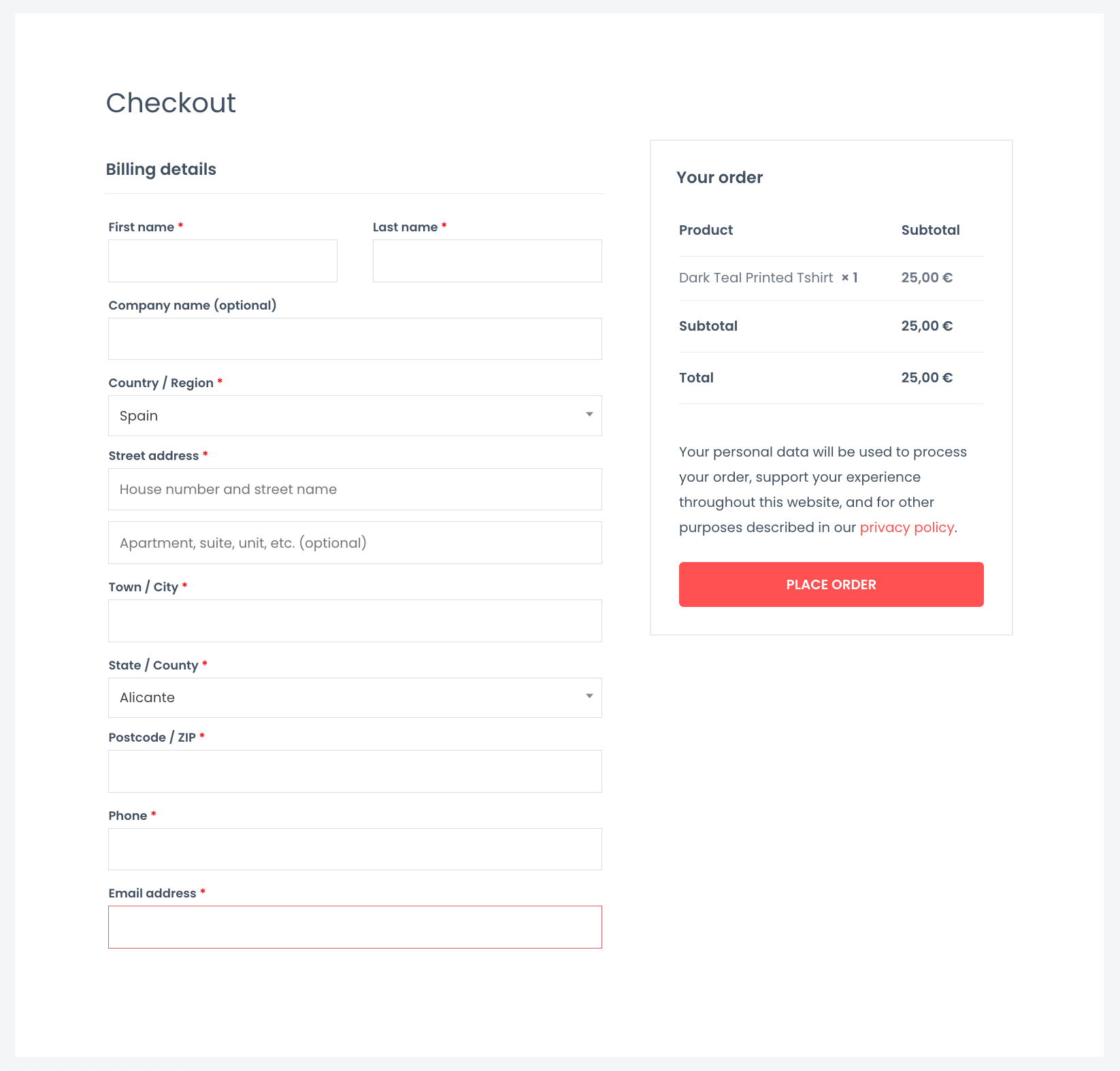
The page asks customers for necessary basic information, like name, address, and billing information. But, WooCommerce doesn’t take into account the specific needs of your business.
With the free version of Checkout Field Editor for WooCommerce, you can edit, disable, or rearrange three different types of fields:
- Billing
- Shipping
- Additional
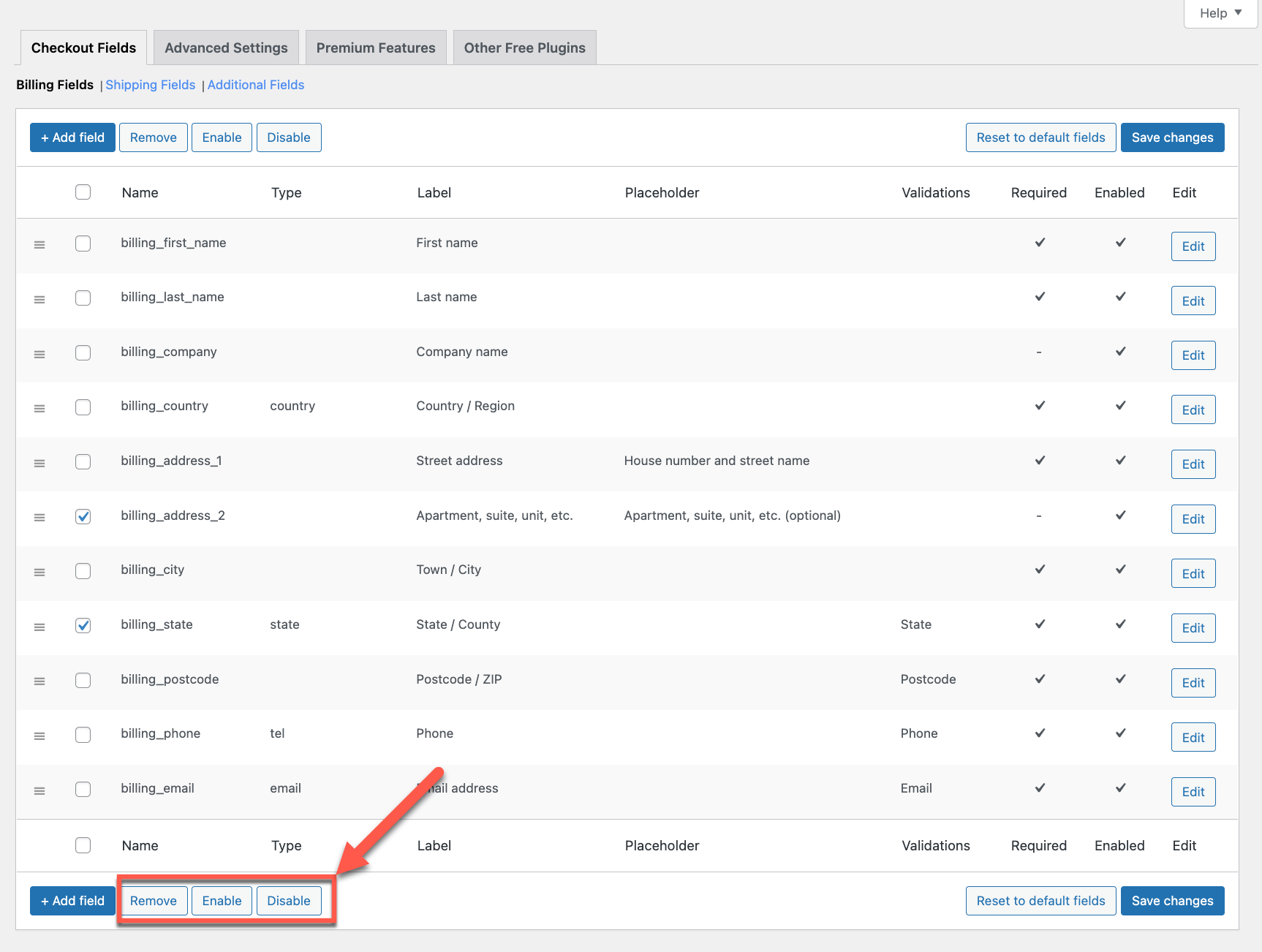
Or, you can add custom fields to all three field types:
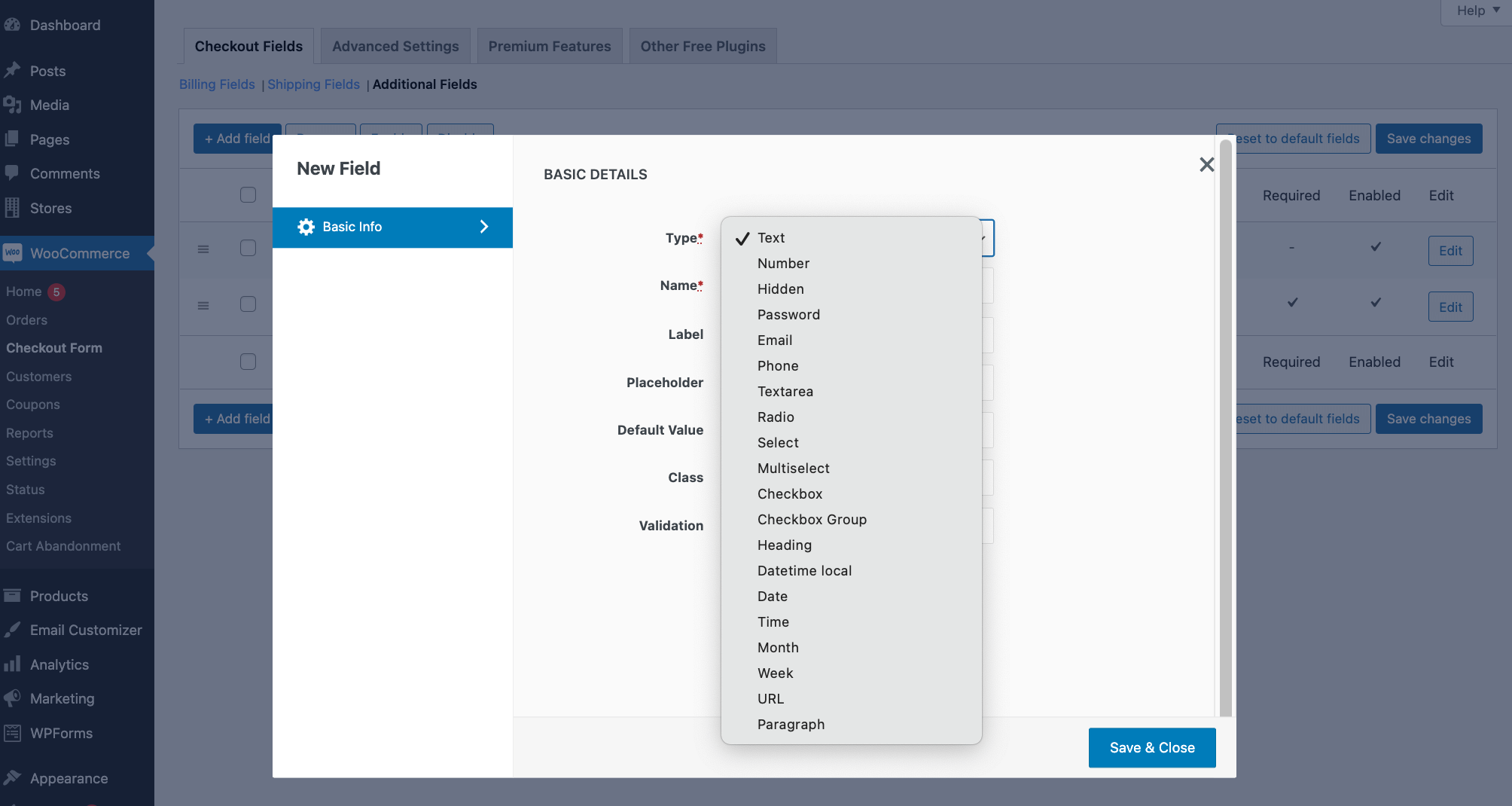
By creating your own Checkout page, you can cut back on the number of hoops your customers need to jump through to buy a product and include any additional fields you think are important.
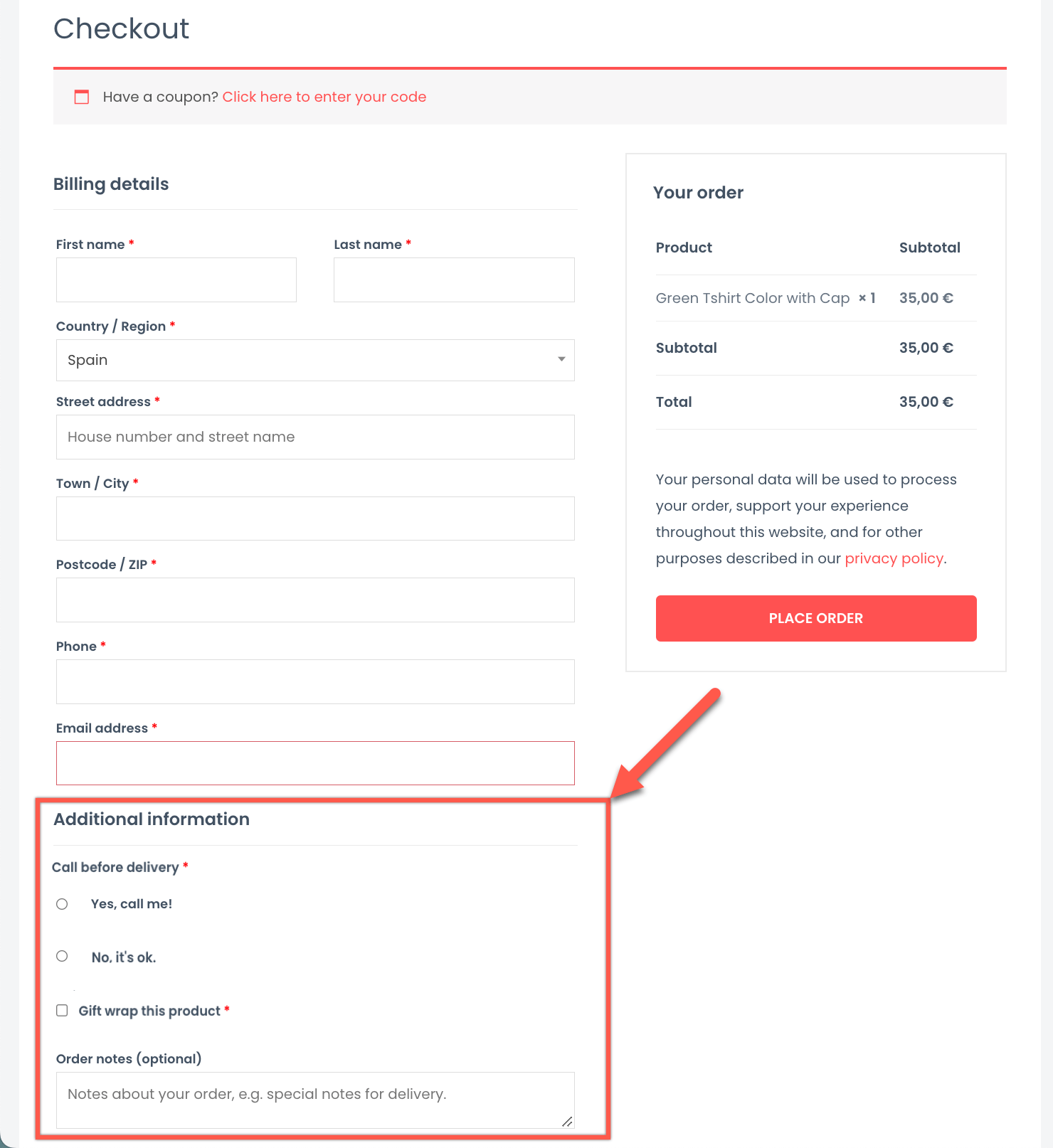
If you’re looking for additional functionality, the Checkout Field Editor Pro comes with 24 custom checkout field types and lets you create additional custom checkout fields and sections.
Creating a Multi-Step Checkout Page
For many customers, a one-page checkout process can appear too lengthy and complicated. And when customers feel overwhelmed, they’re much more likely to consider cart abandonment.
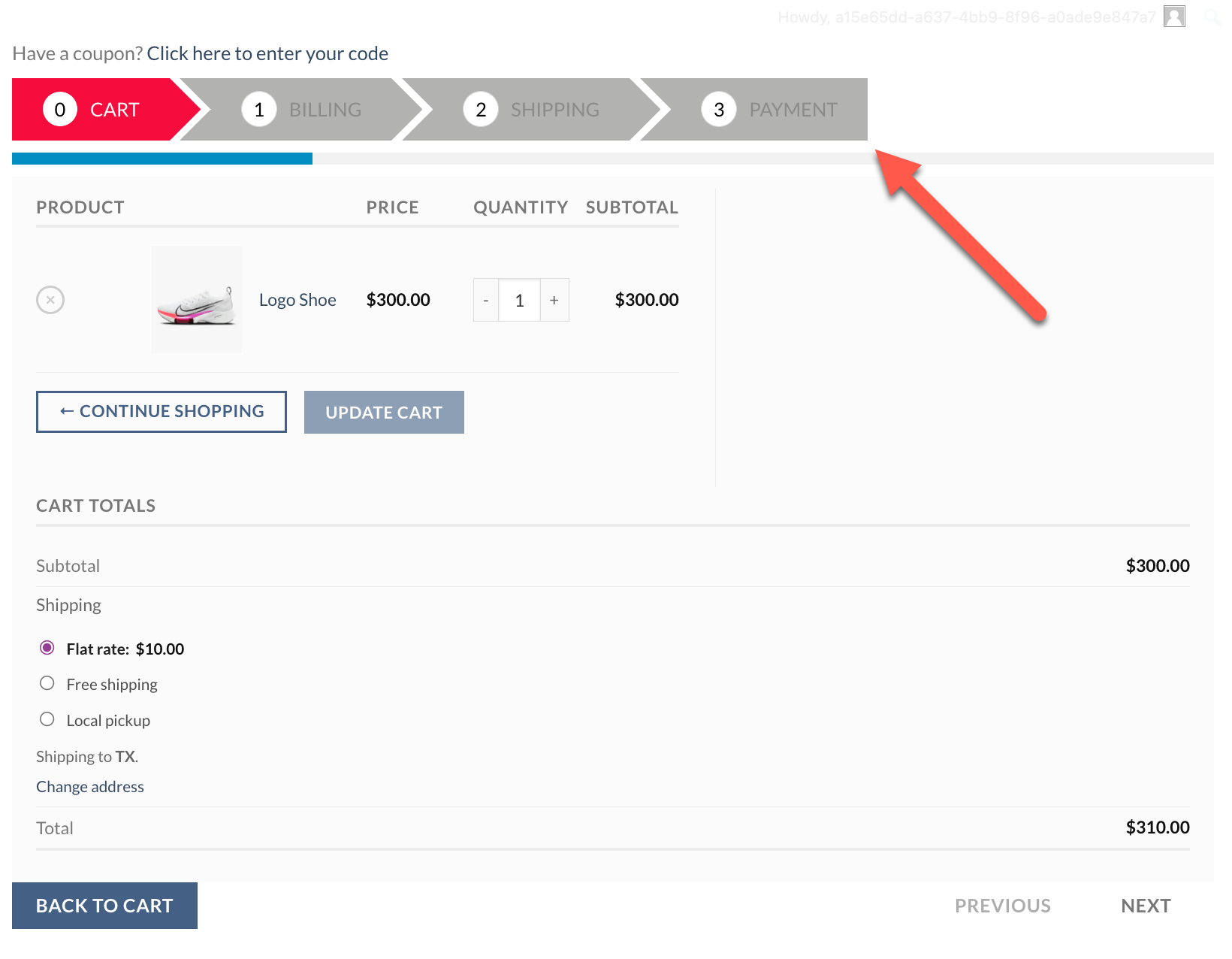
With MultiStep Checkout for WooCommerce, you can split the login, billing, shipping, and order sections of the checkout process into separate steps.
The plugin also lets you:
- Choose from 4 different multistep layout options
- Modify the texts displayed for each step
- Change the background and text colors
- Modify button texts and add a “Back to Cart” button
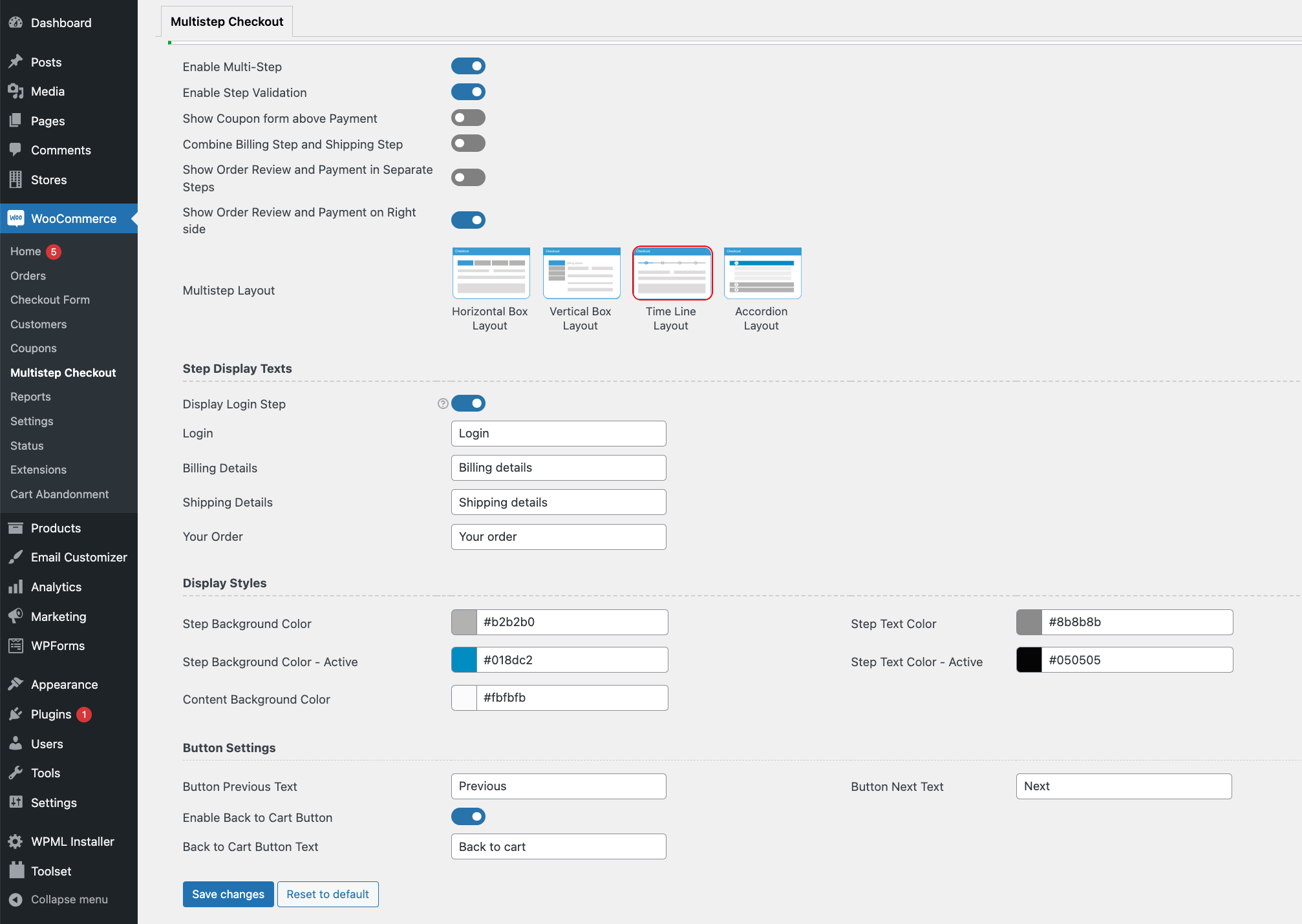
Transforming your checkout page into a multi-step structure makes it look neat and organized. Clearly labeled steps can also decrease the number of errors customers make when filling out their billing and shipping information.
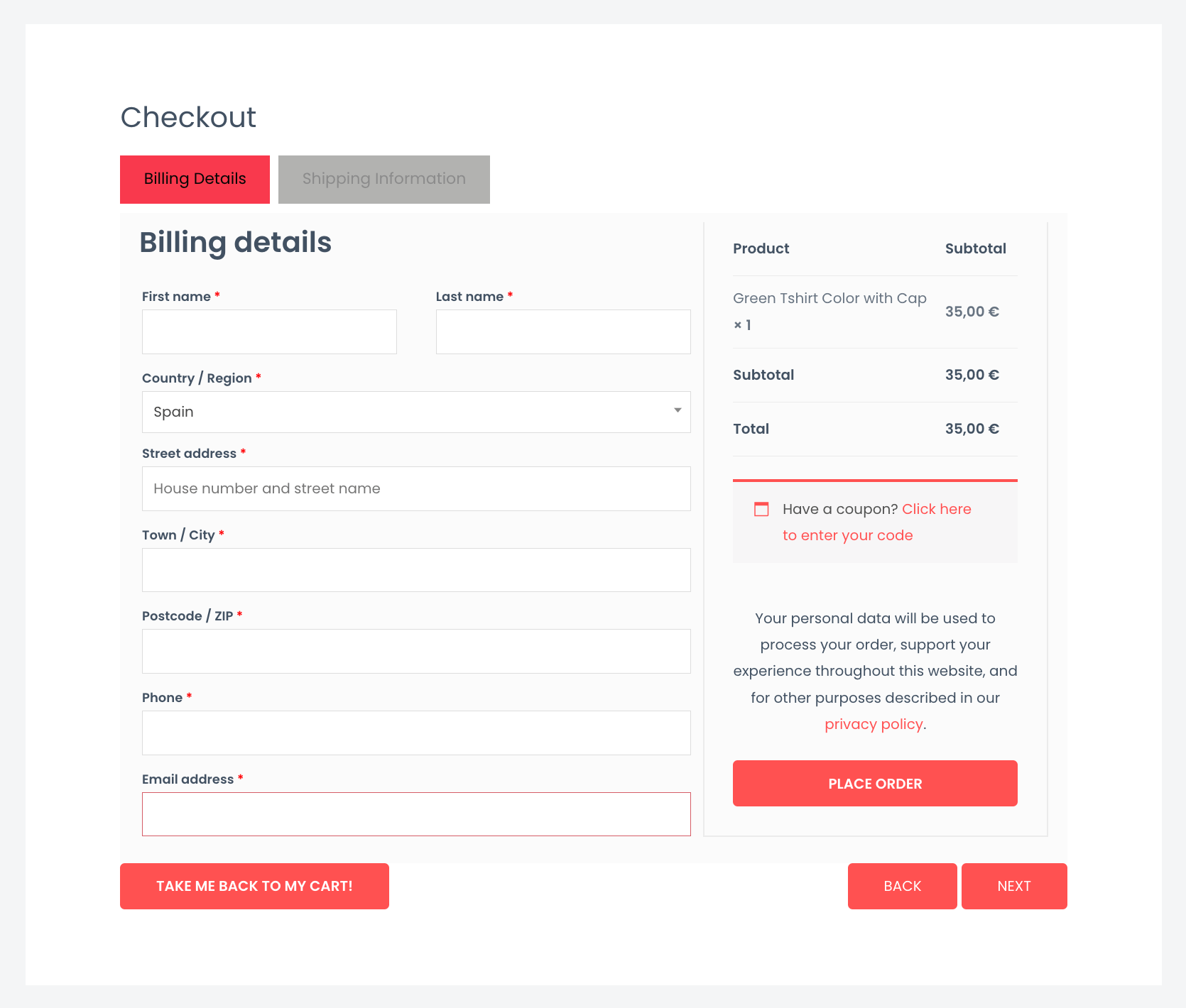
If you want to use this plugin together with ThemeHigh’s WooCommerce Checkout Field Editor to create new steps, you’ll need to upgrade to the premium version of Multi-Step Checkout for WooCommerce. The premium version also comes with more features, like additional layout and styling options. It also lets you upload images to each step of your WooCommerce checkout titles.
Creating Custom WooCommerce Email Templates
After you’ve put in the time and effort to build a custom checkout experience, it would be a shame to forget about sending personalized emails.
In the world of e-commerce, emails are the main link between you and your customers. The generic WooCommerce email templates let you send your message to customers, but they don’t help you establish connections with them.
The Email Customizer for WooCommerce plugin lets you transform the look of your emails. You can use the Template Builder to completely customize 11 default email templates to fit your brand’s voice.
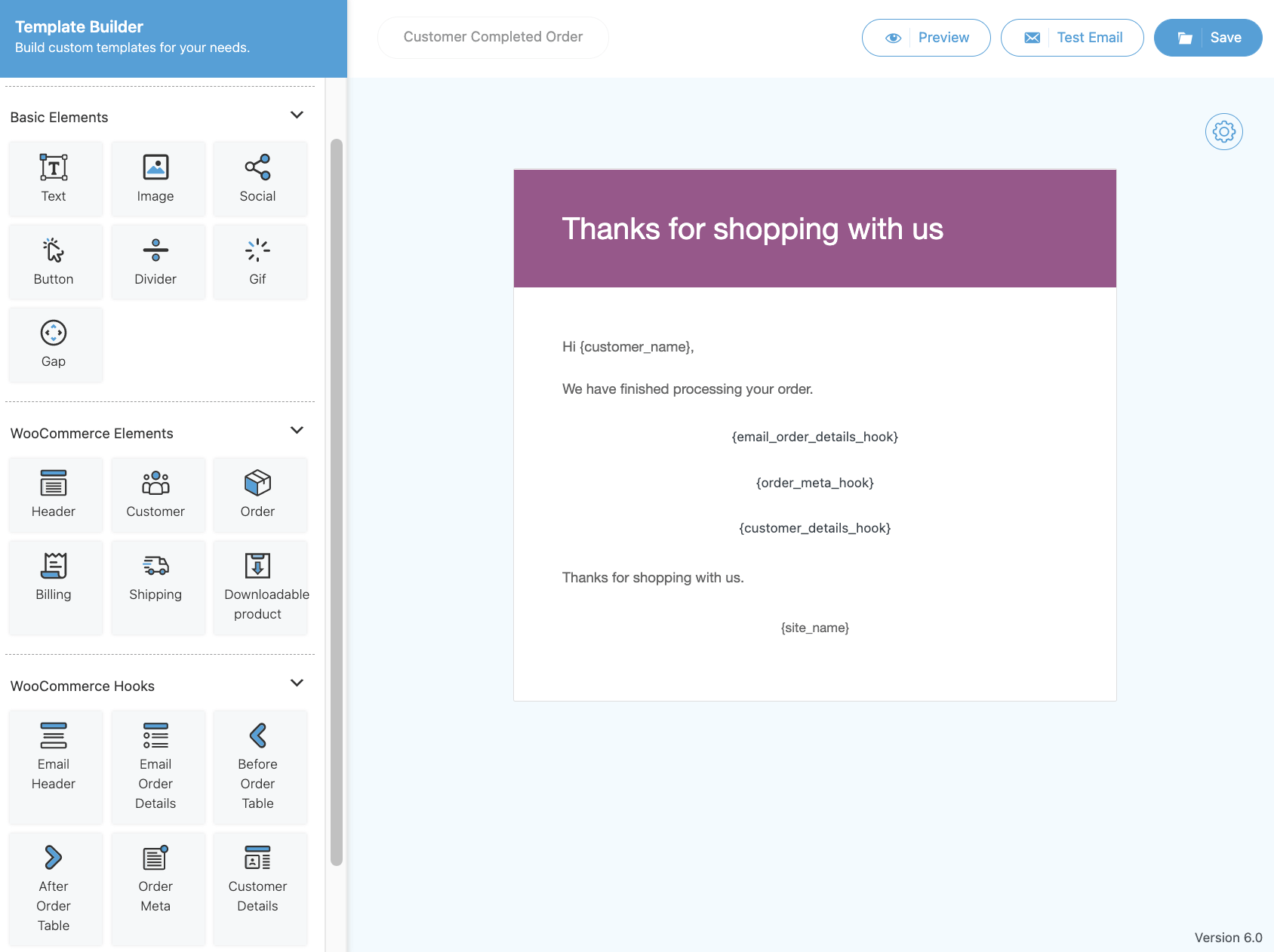
The drag-and-drop builder lets you add and edit text, images, and GIFs, customize background colors, and decide which elements to insert into each template.
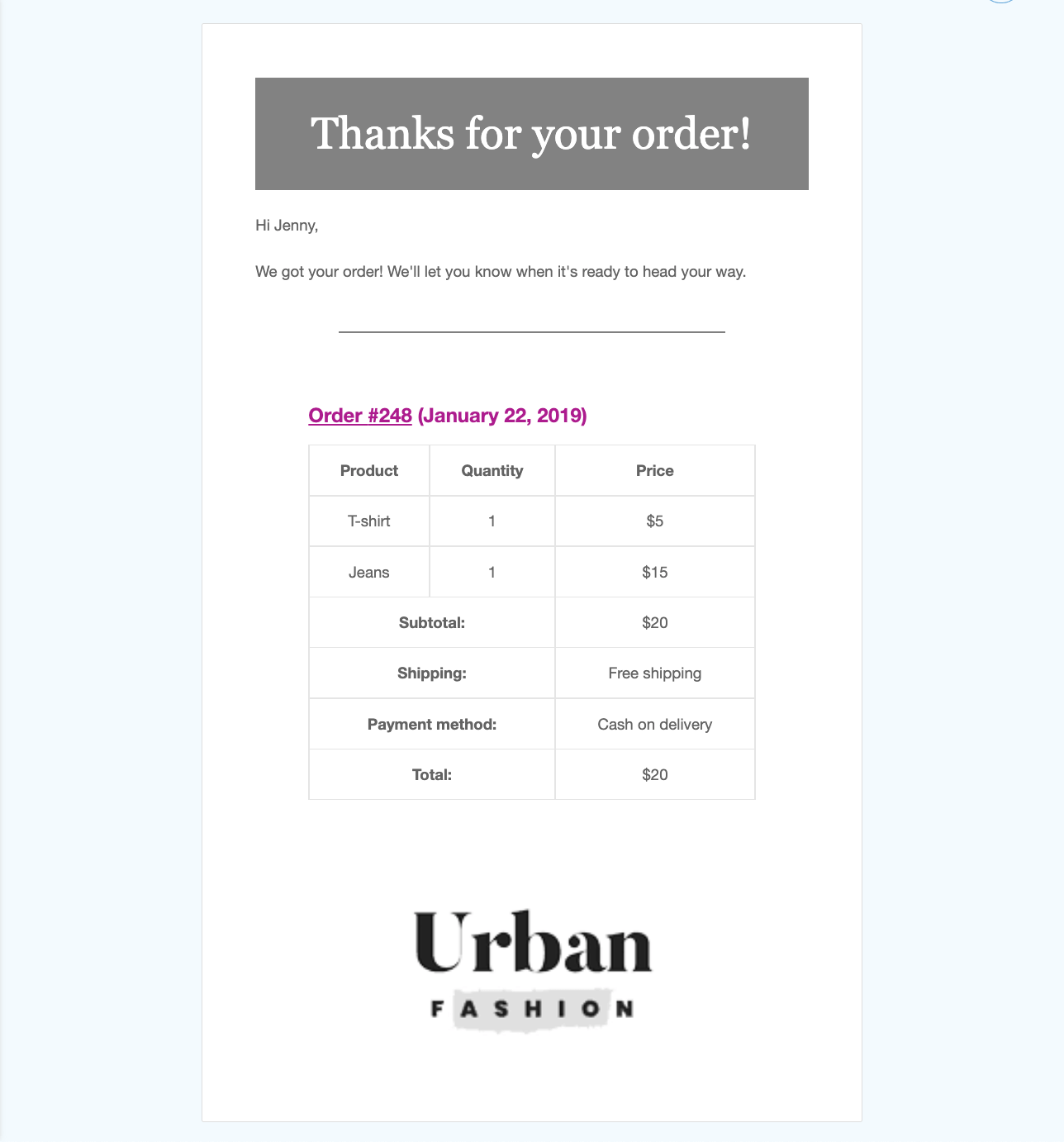
For more customization options and additional placeholders, you can purchase the premium version of the Email Customizer for WooCommerce plugin.
Final Thoughts
The checkout process is one of the last and most crucial steps in a consumer’s journey. As a WooCommerce site owner, it’s your job to make sure your customers can make it to the finish line smoothly.
Thanks to plugins that add functionality to your WooCommerce store, you don’t have to rely on standard WooCommerce features. You can customize everything from your checkout pages to your email templates.
To offer your customers a truly custom experience, we recommend getting the premium versions of the ThemeHigh plugins. They provide significantly more customization options and functionalities than the free versions.
If you’re ready to create your own custom WooCommerce store but aren’t sure where to start, we suggest you take our course about creating custom WooCommerce sites. Then, build your truly custom WooCommerce store with Toolset and use the compatible plugins listed in this post to create an unforgettable checkout experience.
There’s more!
This article is a part of an ongoing series where we present interesting and powerful ideas of what you can build with Toolset. We’re publishing these every few weeks, so stay tuned!
Other articles in this series:
- How Block Patterns Can Help You Build WordPress Sites Easily
- How To Let WordPress Users Create Their Own Profiles in Your People Directory
- How To Create a Custom List of WordPress Pages
- 3 Tips For Creating Magazine-Like Layouts
- How to Build a Truly Custom WooCommerce Store
- 3 Non-Obvious Applications of Post Relationships in WordPress
- Design Beautiful Headers and Footers For Your Toolset Site
- How To Build A Custom Category Tree With Toolset
- 3 Dynamic Designs Using Kadence Blocks To Inspire Your Website
- 5 Advanced Uses of Toolset’s Conditional Block in WordPress

Thanks for sharing this! This is very helpful and relevant to a recent post I made in support asking about checkout customization.
Hi,
Thanks for your comment – we’re so happy to hear you enjoyed the post!
The checkout process plugin I was using was confusing. I was also worried whether I was in complete control. I was very excited to find out that I could use a checkout process controlled by toolset. This article means a lot to me. Thank you very much.
Hi, thanks so much for your message. We hope you enjoy using these WooCommerce-related plugins from ThemeHigh – it’s always so great to find plugins that are feature-filled and fully compatible with Toolset!